14th October 2026
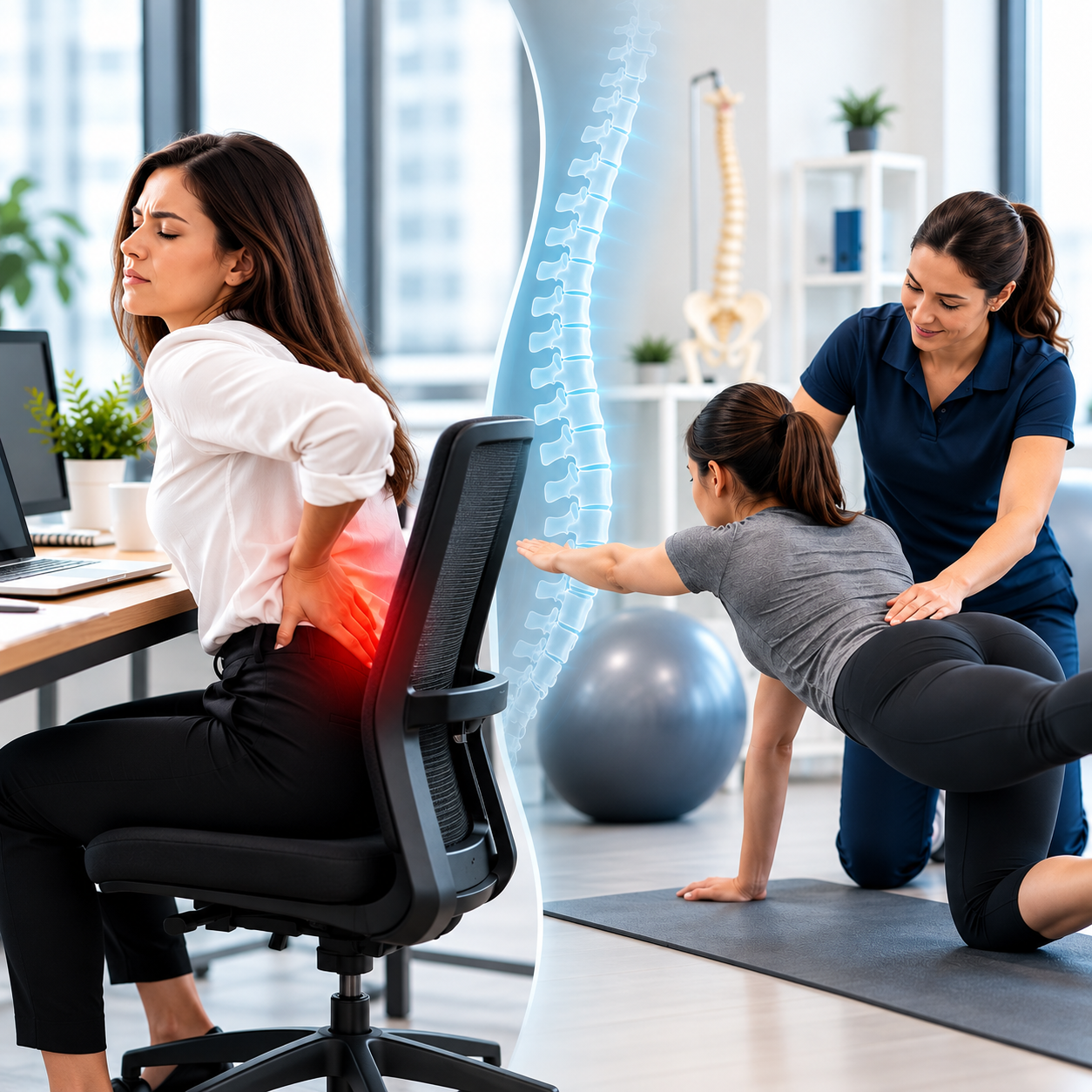
Spending long hours at a desk can contribute to muscle stiffness, reduced mobility, and persistent lower back pain. Whether you work from home or in an office, prolonged sitting and limited movement can affect your comfort and productivity.
The good news? Clinical exercise and physiotherapy can help relieve lower back pain, improve strength, and support long-term recovery.
Prolonged sitting, limited physical activity, poor workstation ergonomics, and reduced muscle endurance can contribute to lower back discomfort. Stress and fatigue may also influence how you experience pain.
Over time, these factors can make everyday activities such as sitting, standing, bending, and walking more uncomfortable.
Clinical exercise therapy involves a personalised exercise programme designed to improve movement, strength, and physical function.
Here are five ways it can help:
Targeted exercises help improve the strength and endurance of the muscles supporting your spine, making daily activities easier.
Gentle stretching and mobility exercises can help reduce stiffness and improve comfortable movement in your lower back and hips.
Guided exercises help you gradually regain confidence in bending, lifting, and performing everyday tasks without unnecessary fear of movement.
Regular movement breaks, short walks, and simple workstation adjustments can help reduce the strain associated with remaining in one position for too long.
A consistent, progressive exercise routine can improve physical function and help you manage recurring symptoms more effectively.
Small changes to your daily routine can make a difference:
Remember, there is no single exercise or posture that works for everyone. Choose movements suited to your symptoms and avoid exercises that significantly worsen your pain.
A physiotherapist can assess your symptoms, identify contributing factors, and develop a treatment plan suited to your needs. Your programme may include strengthening exercises, mobility training, movement education, and ergonomic advice.
Seek professional guidance if your pain persists for several weeks, repeatedly returns, or interferes with daily activities. Back pain accompanied by new bladder or bowel problems, numbness around the groin, or rapidly worsening leg weakness requires urgent medical attention.
A desk job does not have to mean living with constant lower back discomfort. With regular movement, appropriate exercises, and professional guidance, you can improve mobility, build strength, and move more comfortably.
Ready to get back to feeling your best? Consult a qualified physiotherapist to explore a personalised approach to managing lower back pain.